Fieldwork in Millport: A British marine biologist’s haven!
Millport, Scotland - Sep 2021
Day 1 – Arrival & Anticipation
Situated in the Firth of Clyde, just off the coast of mainland Scotland, lies the picturesque Isle of Cumbrae, with the quaint village of Millport at its heart. I arrived on the 10th of September, passing through the lively city of Glasgow. As I reached the charming Marine Research facility at FSC Millport, I exhaled deeply, feeling the stress of crowded train stations and busy city streets melt away. After settling into our accommodation, I didn’t waste a moment. I headed straight for the shoreline, eager to explore and test out my newly purchased, much-loved binoculars.
It wasn’t long before we were handed a packed schedule of seminars, lectures, and field practicals to dive into over the next week. I was bursting with enthusiasm and excitement. Honestly, this trip couldn’t have been better suited for someone like me. With a lifelong fascination for marine life, the idea of an entire week devoted to studying coastal and marine creatures had me buzzing with anticipation. That first night, I could barely fall asleep—not because of the unfamiliar bed, but because I couldn’t stop thinking about the adventure ahead. After a final glance at the clock—1:30 am—I finally drifted off.
Day 2 – The Tides Take Control
Morning arrived early—very early.
Our professor had made one thing abundantly clear: “the life of a marine biologist is dictated by the tides.” That meant a 5 a.m. start, timed perfectly with the low tide. Normally, I wouldn’t consider myself a morning person, but that day was different. I woke up almost instantly, energised by the anticipation of what lay ahead.
We gathered quietly, exchanging sleepy greetings before making our way down to the shore. What greeted us was nothing short of remarkable. The sun had just begun to rise over the Firth of Clyde, casting soft hues of orange and gold across the water. A thin layer of mist hovered above the surface, diffusing the light and giving the entire scene an almost surreal quality.
It was peaceful—but that peace masked the challenge ahead.
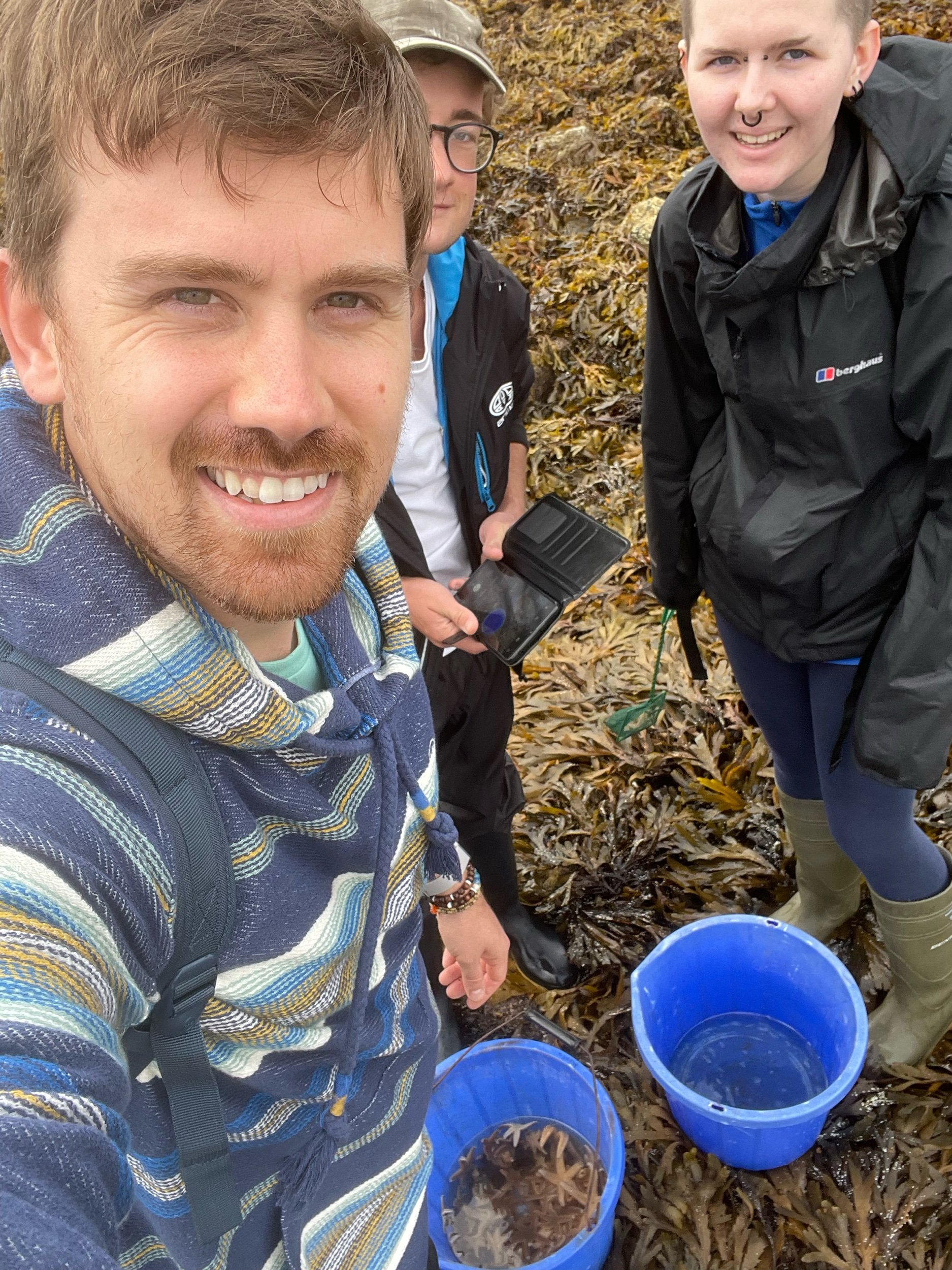
As the tide had retreated, it revealed an expansive rocky shore. Large slabs of rock, normally submerged, were now exposed. Each one was coated in a dense layer of algae, making movement across them precarious at best. Every step required careful thought; one wrong move and you’d quickly find yourself slipping.
Our first practical began here. Quadrat sampling—simple in theory, more complex in execution under these conditions. Placing the frame securely, recording species, maintaining balance—it required focus. At first glance, the shore appeared chaotic, but as we began sampling, patterns started to emerge.
Barnacles dominated the upper shore, tightly packed and adapted to withstand long periods of exposure. Further down, mussels formed dense clusters, creating microhabitats for smaller organisms. In rock pools, a completely different environment existed—one that remained submerged even at low tide. Here, small fish, anemones, and crustaceans thrived, relatively buffered from the harsh conditions of the exposed rock.
What initially felt overwhelming began to make sense.
By the end of the session, I was exhausted—physically from navigating the terrain, and mentally from processing so much new information, building on years of passion and enthusiasm for rock pooling and marine biology harnessed over the past 30+ years. It was, however, the kind of exhaustion that comes with satisfaction. The kind that tells you you’re exactly where you should be.
Day 3 – Making Sense of the Shore
Quadrat sampling introduced structure to what initially felt like chaos. Barnacles dominated the upper shore, mussels clustered below, and rock pools revealed a hidden diversity of life. Patterns began to emerge—this wasn’t random, but a system shaped by environmental gradients.
Day 4 – Expanding the Ecosystem
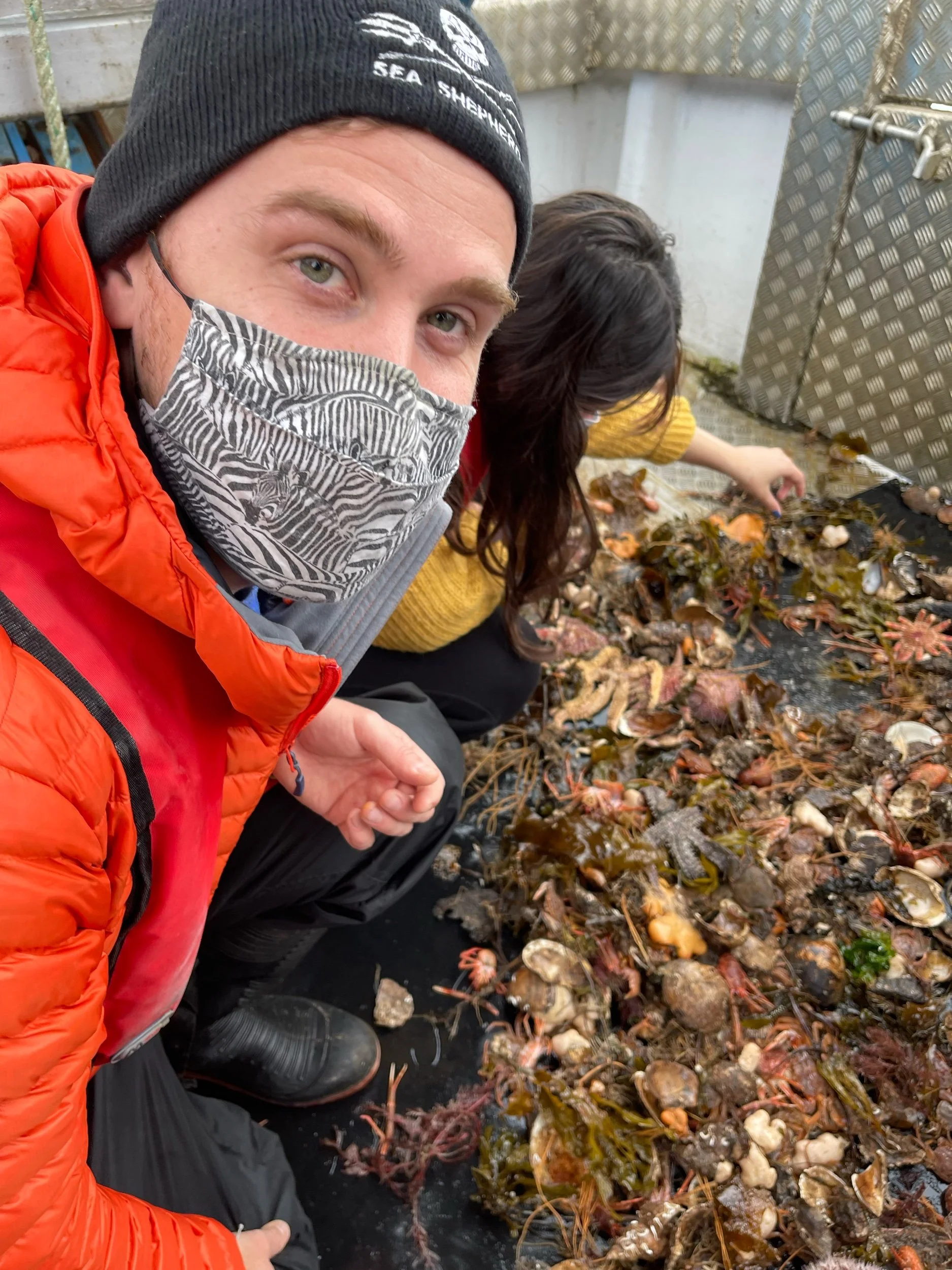
Our focus broadened beyond rocky shores. Sampling different habitats highlighted how varied coastal ecosystems can be, even within a small geographic area. Each environment told a slightly different ecological story.
Day 5 – Challenges & Adaptation
Fatigue set in. Early starts, long days, and physically demanding terrain began to take their toll. But this is field ecology—unpredictable, often uncomfortable, and always rewarding. Learning to adapt became part of the process.
Day 6 – Confidence & Clarity
By now, everything felt more intuitive. Species were easier to identify, methods more familiar, and the once-chaotic shoreline now made sense. The shift from confusion to understanding was one of the most rewarding parts of the week.
Day 7 – Reflection
As the course came to an end, it was clear how much had changed in just a few days. What started as an unfamiliar environment had become something I could interpret and understand. More than anything, it reinforced my passion for marine ecology.
Final Thoughts
The Field Studies Council Millport is more than just a field centre—it’s a place where theory meets reality. This experience didn’t just teach me about marine ecosystems; it showed me what it means to work within them.
For a British marine biologist, it truly is a haven.